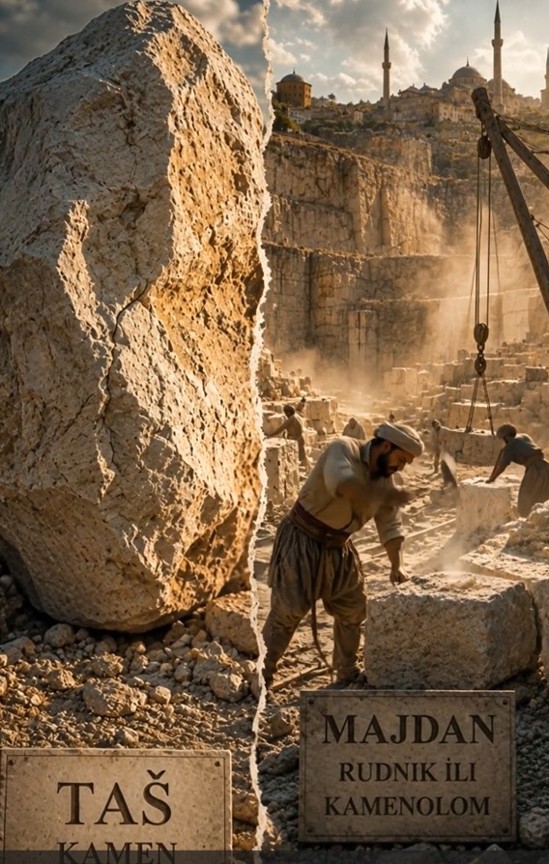
The answer lies in two words arriving during the Ottoman period: “taş” (stone) and “majdan” (mine/quarry). Tašmajdan literally translates to “quarry”. It was the vital source of building stone in Belgrade’s history, a “factory” building the city. Romans built Singidunum walls, public baths, and sarcophagi from it; Byzantines, Ottomans, and 19th-century Serbs built the National Theatre, St. Mark’s Church, and city ramparts from it. Much of old Belgrade literally grew out of Tašmajdan.