


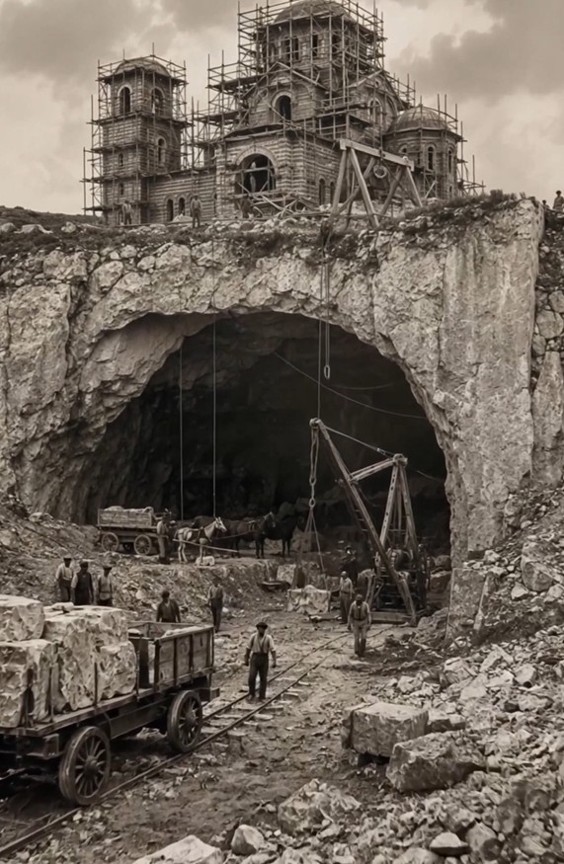
Walking through Tašmajdan Park today, it is hard to imagine a network of caves, galleries, and corridors created over centuries lies just meters below. The story begins long before Belgrade, when Pannonian seabed organisms formed thick limestone layers. Romans, medieval builders, and Ottomans extracted stone here, giving the site its name — Tašmajdan (“taş” stone + “majdan” quarry).
How the underground labyrinth was formed:
Every extracted stone block left a new cavity. Over hundreds of years, massive halls, narrow passages, and galleries grew beneath the park. Today, dozens of rooms and corridors exist. Some are explored, some walled off, and others closed to the public. During WWI and WWII, galleries saved lives as air-raid shelters. Wehrmacht forces added power, ventilation, and phone lines. Stable limestone temperatures made long stays feasible.
Secret tunnels or just legends?
Popular legend claims secret passages connect Tašmajdan to Belgrade Fortress (Kalemegdan) or the royal palace. However, despite intense interest, no reliable historical or archaeological proof exists for long tunnels to Kalemegdan. Experts believe stories mixed actual quarry galleries with urban legends. Still, the underground remains one of Belgrade’s most mysterious sites.