


For many Belgraders, Tašmajdan is a place of first swimming strokes, school competitions, concerts, ice skating, or summer evenings spent at the stadium. Generations learned to swim here, cheered at sports games, and listened to major domestic and global music stars. However, few know that the story of this sports center did not begin in the 1950s, but about 15 million years ago, when a sea existed in this very spot.
When Tašmajdan was the seabed:
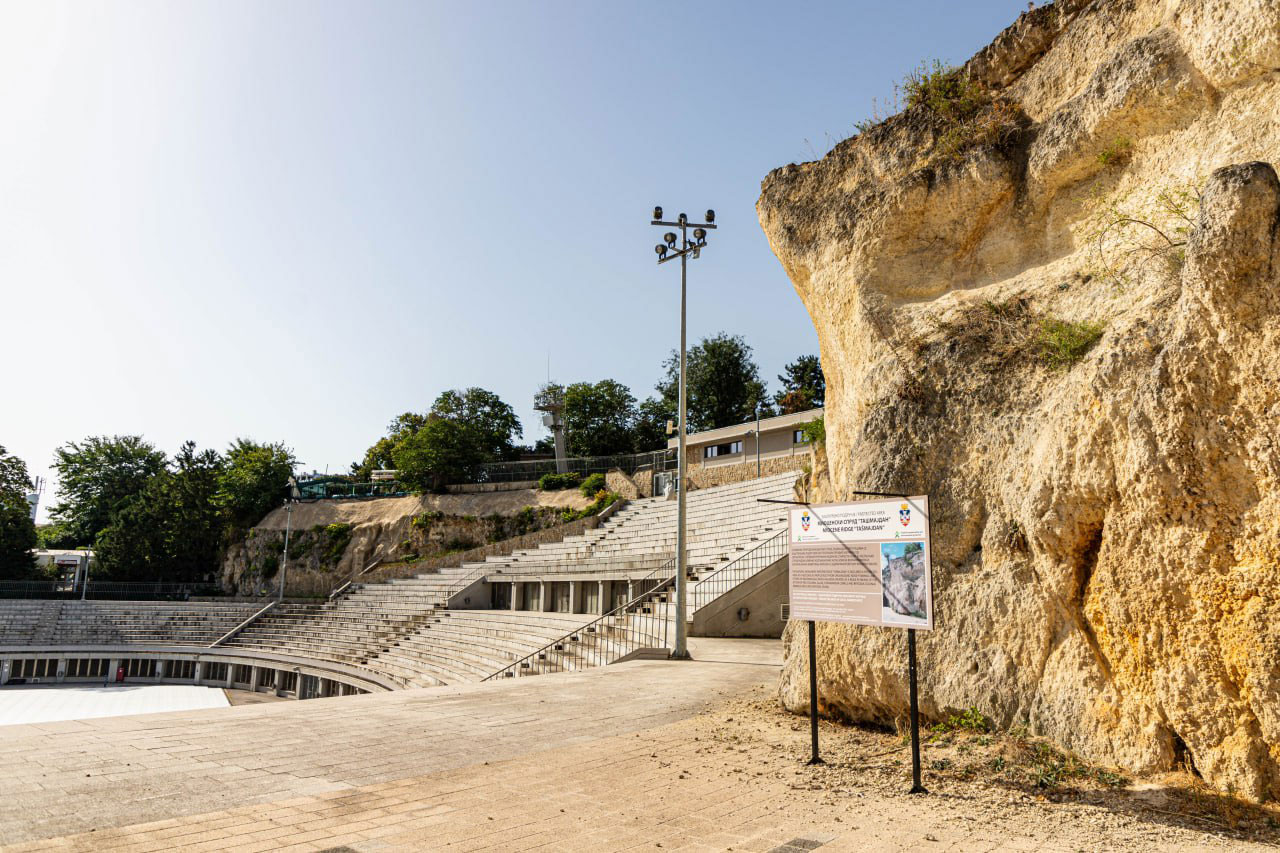
In the Miocene period, between 15 and 20 million years ago, the area of present-day Belgrade was submerged under the water of the vast Pannonian Sea. Where the stadium and pools stand today, a coral reef existed, populated by corals, shells, sea urchins, snails, and other marine organisms. Their remains accumulated on the seabed over millions of years, creating thick layers of limestone. This stone later became one of the most vital building materials in Belgrade’s history. Due to numerous fossils found, the Tašmajdan Miocene Reef is protected as a natural monument today and represents one of the most significant geological sites in Serbia.
From quarry to sports center:
Centuries after the sea receded, the Romans opened a quarry here from which they extracted limestone to build Singidunum. After them, Byzantines, medieval builders, and the Ottomans used the same stone, naming the area Tašmajdan — from Turkish words “taş” (stone) and “maydan” (quarry). After World War II, Belgrade wanted a modern sports complex in the city center. Instead of filling in the old quarry, architects decided to integrate it as part of the project. It was a bold and unusual move for that time. Stadium construction began in 1952, and it officially opened on January 24, 1954. Around 900 workers participated in the construction, and the stands were largely carved into the existing limestone rocks, making the stadium unique in appearance to this day.
How one of Belgrade’s symbols was born:
The development of the complex did not stop with the stadium’s construction. In 1961, a large open-air Olympic pool was opened, quickly becoming one of Belgraders’ favorite summer gathering spots and a venue for numerous domestic and international competitions. Seven years later, in 1968, an indoor pool was opened, which was one of the most modern in Yugoslavia at the time. Its recognizable glass facade made it possible to open an entire wall of the facility during summer, making the indoor and outdoor pools a unique sports unit. Such an architectural solution was extremely modern for that era and represented one of Tašmajdan’s trademarks.
A place of major sports and cultural events:
Over more than seven decades, the Tašmajdan Sports Center has hosted some of the most significant events in the history of Yugoslav and Serbian sports. European and world championships in swimming, diving, and water polo were held at the pools, while generations of top swimmers and water polo players grew up here, later winning Olympic and world medals. The stadium hosted athletics competitions, boxing matches, hockey spectacles in front of tens of thousands of spectators, major concerts by domestic and global music stars, as well as events almost forgotten today. It was right here in 1978 that the famous match was held in which Zastava 750 (“Fića”) cars played football, one of the most unusual sports spectacles in Yugoslav history.
Sports above fossils older than humanity:
Perhaps the most incredible thing is what lies beneath the sports center itself. Beneath the stadium, pools, and stands, remnants of the former quarry still exist today, and fossils of organisms that lived in a tropical sea about 15 million years ago are preserved in the limestone rocks. This means that athletes training at Tašmajdan today, as well as thousands of visitors coming to the pools or concerts each year, are actually staying above rocks formed millions of years before humans appeared. That is why the Tašmajdan Sports Center is much more than a place for sports and recreation. It is a unique fusion of nature, history, architecture, and sports. There are few places in Europe where remnants of an ancient sea, a Roman quarry, underground caves, and a modern sports complex can be found in the same space. That is precisely why Tašmajdan is not just a symbol of Belgrade sports — but also one of the most unusual places in the city’s history.