


Professor Dejan Radivojević
With collaborators:
- Imre Magyar
- Marijan Kovačić
- Michal Šujan
Author: Nemanja Mitrović, BBC Journalist
Imagine diving headfirst from Belgrade’s Kalemegdan into deep saltwater, giant sharks and whales swimming across Vojvodina instead of Danube asp and Tisa zander, and riding a speedboat from Avala to Fruška Gora.
All of this would still be possible today if the waves of the ancient Pannonian Sea—or lake—which existed in these areas for several million years, were still washing over the central parts of Europe and northern Serbia.
“The Pannonian Sea is the common name for a large body of water that covered parts or the entire area of today’s Pannonian Basin in the geological past,” states Marijan Kovačić, professor at the Department of Geology, Faculty of Science in Zagreb, for BBC in Serbian.
The main features of this vast body of water, he says, were “large fluctuations in surface area and depth”, as well as “water salinity”. Thus, he adds, out of its fifteen million years of existence, only a quarter of the time—about four million years—was it actually a “true sea”, while the rest of the time it was a “brackish (semi-salty) or freshwater lake”.
The Pannonian Sea, as it is popularly called—or lake, which is a more precise scientific term—occupied the space between the eastern slopes of the Alps in the west and the Carpathians in the east and north, while the Dinaric Mountains mostly formed its southern border. The surface area varied, but at its peak it covered more than 200,000 square kilometers, while the depth in some places exceeded 1,000 meters.
In different phases, its waters partially or completely covered the territory of 10 present-day countries, including Serbia—almost the entirety of Vojvodina and certain areas south of the Sava and Danube rivers.
“It was one of the largest lakes in Earth’s history and probably the largest lake in Europe,” states Michal Šujan, professor at the Department of Paleontology and Geology at the Faculty of Natural Sciences in Bratislava, in a written statement for BBC in Serbian.
His colleague Imre Magyar from the Hungarian Natural History Museum in Budapest says that if it existed today, it would be the second largest lake in the world after the Caspian Sea, and the third deepest after Lake Baikal (Russia) and Africa’s Lake Tanganyika.
Numerous fossils, scientific papers, and songs remind us of the Pannonian Sea today, and it also left humanity a legacy of numerous oil and gas deposits, coal beds, and geothermal springs.
First Salty, Then Fresh — How Was It Formed?
The origin and development of the Pannonian Sea, or lake, “are closely linked to tectonic events and climate changes in the region of present-day Southeastern Europe,” points out Professor Marijan Kovačić.
And it all started with Tethys. More than 100 million years ago, this ancient ocean separated the supercontinents of Laurasia (which included present-day North America, most of Europe, and Asia) and Gondwana (which consisted of Africa, South America, Antarctica, Australia, and parts of Asia and Oceania).
Due to tectonic movements—mechanical shifts of the Earth’s crust caused by internal forces in the Earth’s mantle—about 34 million years ago, ancient Tethys disappeared, leaving behind several bodies of water in the planet’s geological history. One of them was Paratethys, an inland sea that stretched from the Gulf of Lion in France in the west (where it communicated with the Mediterranean) to the Aral Sea in Asia in the east.
This huge body of water was named by Russian-Serbian geologist Vladimir Laskarev in 1924, who claimed it represented “one of the most significant consequences that accompanied the uplift of the Alpine mountain system.”
Part of Paratethys also encompassed the Pannonian Basin, a vast depression in the Earth’s crust formed by the subsidence of the old Pannonian landmass along major fault lines.
“It is a back-arc basin that formed in the Miocene about 20 million years ago, although there are indications that this occurred somewhat earlier, during the Late Oligocene,” says Dejan Radivojević, professor at the Faculty of Mining and Geology in Belgrade, for BBC in Serbian.
The Miocene, like the older Oligocene, represents epochs—periods of time in Earth’s geological history within the Cenozoic era in which we live today. When Paratethys waters finally flooded into the basin, the Pannonian Sea was born—a term that scientists generally avoid. Many geologists consider Central Paratethys a more appropriate name for this body of water, while linking the name Pannon to the lake that succeeded it.
“Lake Pannon, the successor to the central part of Paratethys, was formed about 11.6 million years ago with the uplift of the Carpathians and the complete severance of connection with Eastern Paratethys, whose remnants are today’s Black, Caspian, and Aral Seas,” explains Professor Radivojević.
Imre Magyar, the paleontologist who named Lake Pannon, says that “its surface area continuously changed throughout its long eight-million-year history.”
“Some parts were gradually filled with sediment, turning into dry land, while others were flooded, thus increasing the lake’s surface area and volume,” explains the Hungarian scientist from the Paleontology Group of the Research Center for Natural Sciences at Eötvös Loránd University in Budapest (ELKH-MTM-ELTE).
The lake covered the entire Pannonian Basin, where today lies a vast fertile Central European plain shared to varying degrees by ten countries, including Austria, the Czech Republic, Slovakia, Ukraine, Romania, and Hungary. The waves of Lake Pannon also reached the northern and eastern parts of modern Croatia, Slovenia, Bosnia and Herzegovina, and Serbia. Almost all of present-day Vojvodina was under water, as were the lower reaches of the Velika Morava, Kolubara, and Drina rivers, which acted as bays.
Life and Death of Lake Pannon
The Pannonian Sea, or lake, went through various phases. When it was part of Paratethys more than 15 to 16 million years ago, it had all the characteristics of an ordinary sea, says Professor Kovačić.
“For the next few million years, we can say that a true Pannonian Sea existed which, due to the warm and humid climate at the time, resembled present-day subtropical seas in all its features and living organisms,” explains the Zagreb geologist.
A couple of million years before saltwater broke into the Pannonian Basin, this area was filled by numerous smaller lakes—“and according to some scientists, one large freshwater lake.”
The next phase occurred 11.6 million years ago, when the disconnect from “surrounding marine spaces” created the “large brackish (semi-salty) Lake Pannon.”
“From then until about nine million years ago, this lake expanded its surface area and reached depths of over 1,000 meters in the deepest parts. After that, through the inflow of large quantities of gravel, sand, and mud carried by river flows from surrounding mountain ranges, its surface area gradually decreased and it became increasingly shallow,” Kovačić points out.
Lake Pannon gradually began to disappear over time. The prehistoric Danube and Tisa rivers contributed most to this process, carrying the largest volume of material whose sediments filled two-thirds of the basin.
“Through interpretation of geological data, we know that these two shelf margins of the system merged about four million years ago along the Zrenjanin–Timișoara line, which marked the end of Lake Pannon’s life,” highlights Professor Radivojević.
Unlike the lake, he adds, the rivers continued to exist and are now filling other basins with their sediment, such as the Black Sea.
In the book Geography of Yugoslavia I by Dragan Rodić and Mila Pavlović, it is stated that “Lake Pannon drained through the Đerdap (Iron Gates) Gorge 600,000 years ago.” However, Radivojević states that “it did not drain,” for which there are “reliable proofs obtained from the oil industry—well data and seismic profiles.”
Professor Kovačić offers another theory—that five million years ago, a smaller freshwater Paludina, or Slavonian Lake, was formed, whose infilling two million years ago marked the moment when “the Pannonian Sea definitely ceased to exist.”
Imre Magyar notes that some scientists also believe that the lake continued to exist until then—during the Pleistocene epoch—as a “shallow, freshened lake.”
“Historical continuity between the brackish Lake Pannon and this freshwater lake is possible, but poorly documented,” concludes the Hungarian geologist.
Megalodon near Višnjica, Whales in Zagreb
The existence of the Pannonian Sea in Central Europe is also evidenced by numerous plant and animal fossils found in the region. The animal kingdom was particularly diverse, and prehistoric species whose modern relatives inhabit exotic seas and oceans swam here.
Thus, for example, based on fossil remains from the Belgrade neighborhood of Višnjica, it was discovered that a species of Megalodon shark—Otodus (Megaselachus) megalodon—lived along this stretch. On the other side of Belgrade, in Bele Vode near Žarkovo, remains of baleen whales were discovered, according to Professor Radivojević.
In addition to sharks and whales, various corals, sea urchins, fish, clams, snails, and other organisms lived in the salty Pannonian Sea.
“As the water freshened, the living organisms changed too, so marine fauna was replaced by an animal kingdom adapted to brackish and completely freshwater conditions—Lymnocardium and Congeria clams, Melanopsis snails, and small ostracod crustaceans,” lists the Belgrade professor.
In the Pannonian Sea in present-day Croatia, large mammals also lived, and one baleen whale was even named after the capital city of Zagreb—Mesocetus agrami. Remnants of the so-called Zagreb whale were found in the Podsused quarry. Professor Kovačić states that it was named by Belgian zoologist and paleontologist Pierre-Joseph van Beneden in 1886 after determining, based on skull bones, jaw, and ribs, that it was a new species from the extinct genus Mesocetus.
“Modern whales from that family are among the largest animals on Earth and can reach lengths up to 30 meters. As for the Zagreb whale, it was concluded to be approximately six meters long, indicating a younger specimen,” states the Zagreb geologist.
At the same location, the species Heterodelphis (Platanista) croatica, belonging to oceanic dolphins, was also found.
Imre Magyar says that the “endemic evolution” that occurred in these waters “resulted in perhaps the most diverse known lake mollusk fauna in Earth’s history.” As examples, he cites mollusks from the Dreissenidae and Cardiidae families, while endemic species limited to specific areas were also found among clams, fish, and various groups of algae.
Radivojević notes that the red algae Lithothamnion, probably the most significant plant of the Pannonian Basin, was responsible for the formation of “numerous reefs”, as was the Dinoflagellata algae during the “freshened phase of Lake Pannon.” Along the shore, diverse vegetation flourished, including pine, poplar, elm, birch, maple, and even cinnamon trees.
Legacy: Oil, Coal, Gas
Although humans did not swim or fish in the Pannonian Sea, modern states in this region benefit greatly from it today. Radivojević says that “Pannonian Sea sediments account for almost all oil and gas production in our country,” as well as coal, construction materials, spa tourism, and geothermal energy.
As examples, he cites the Banat oil and gas fields Velebit, Mokrin, and Kikinda, as well as Jermenovci and Velika Greda, where these important non-renewable energy sources were “first discovered and where production began.”
In the Kolubara and Kostolac mining basins, Pannonian coal deposits—lignite—are also exploited, while spas like Kanjiža, Melenci, and Vrdnik are inextricably linked to the Pannonian Sea. Its natural resources also supply raw materials for the Cement Factory in Beočin, on the slopes of Fruška Gora.
This mountain, like the Vršac Mountains near the Serbian-Romanian border, as well as Avala and Kosmaj south of Belgrade, were islands or peninsulas at various stages of the Pannonian Sea’s existence.
“Its sediments also represent a natural laboratory showing how the paleo-environment and climate can change over time due to the disappearance of a large body of water, which happened several times around Lake Chad in North Africa, and now around the Aral Sea. It is of great societal interest to understand in detail the causes and consequences of such environmental changes, especially in the context of current climate change,” highlights Slovak geologist Šujan.
Serbia in the Introduction and Conclusion
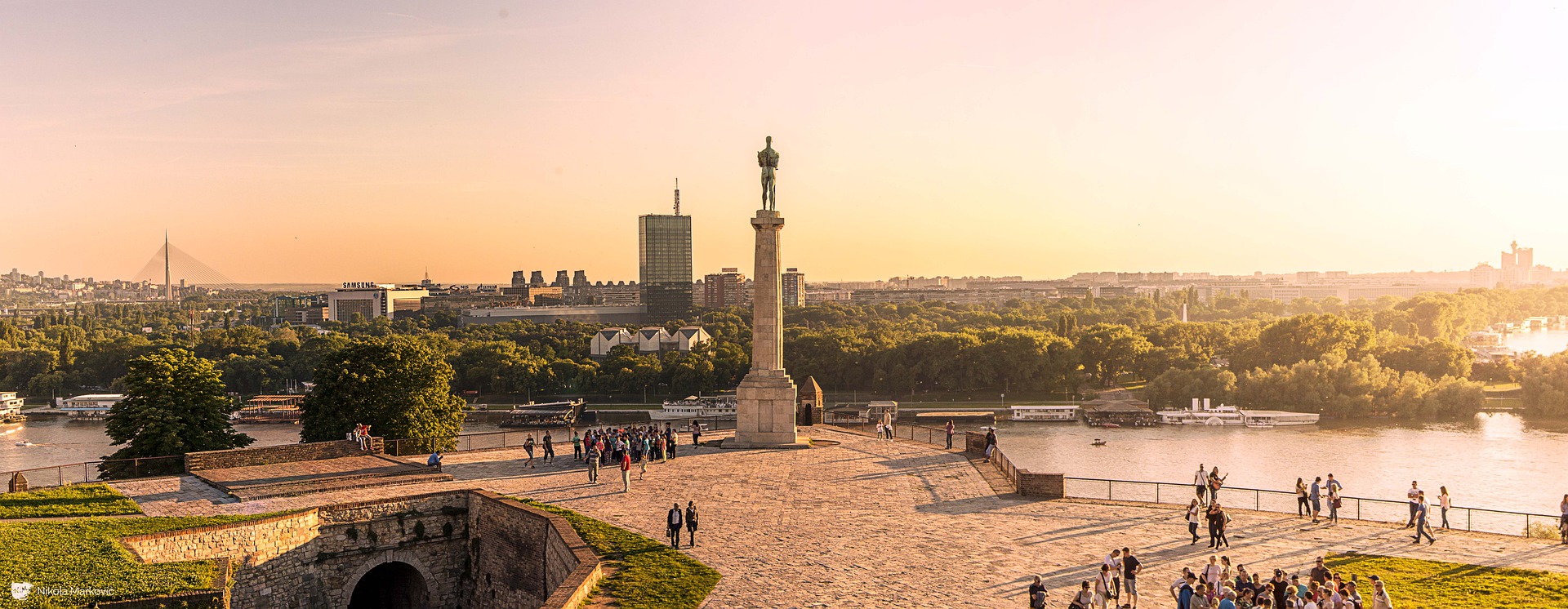
Traces of the Pannonian Sea can be seen with the naked eye across Belgrade today. There is the Kalemegdan profile—the so-called cape below the Victor monument—and the Tašmajdan stadium, which prove the existence of reefs: elongated underwater deposits formed by the accumulation of mineral or organic material.
Remnants of the Pannonian Sea also exist in Belgrade neighborhoods such as Rakovica, Sremčica, Barajevo, Umka, Banovo Brdo, and elsewhere.
Professor Radivojević reminds us that Serbia, in a way, came full circle in the evolution of the Pannonian Sea, or lake. To begin with, geologist and Belgrade University professor of Russian origin, Vladimir Laskarev, named Paratethys, and finally, four million years ago, this body of water “lived its final days” near Zrenjanin.
“In this way, we can say that we participated in the geological history of this area from its baptism to its very end,” concludes Radivojević.